
When people say they want to get “better at medication management,” they usually do not mean they want a prettier pillbox. They mean they want to stop wondering whether they missed something important. They want to know what they are taking, why they are taking it, when they will run out next, which doctor is managing what, and what needs to happen if something changes.
That is true whether you take one daily prescription or manage five prescriptions for yourself, your child, your parent, or your partner. Medication management is not just adherence. It is coordination.
What better medication management actually means
Most people think medication management starts with a reminder. In reality, that is only one piece of the job. Better medication management usually means having a reliable system for six different things at once:
- what the medication is and what it is for
- who prescribed it and who should answer questions about it
- when it is taken and what happens if a dose is missed
- when it needs to be refilled
- what side effects, labs, or follow-up steps matter
- what is changing over time
That is why medication management often breaks down even for smart, conscientious people. The work does not live in one place. It lives across a pharmacy app, a patient portal, a specialist’s after-visit summary, text reminders, insurance notices, and memory.
What falls through the cracks when you are managing prescriptions manually
The failure mode is usually not dramatic. It is administrative drift. A refill gets pushed too close to the deadline. A medication changes after a visit, but the old one is still sitting in your notes. One specialist starts something and assumes the primary care doctor knows. A side effect shows up, but nobody has a clear record of when the dose changed. If you are managing medications for multiple family members, the confusion compounds fast.
That is the real burden people are trying to solve. They do not just want to remember “take the pill.” They want confidence that the whole medication picture is under control.
The core things you need to track if you take one or many prescription medications
If you want a medication system that actually works, the minimum useful structure usually includes:
- the medication name, dose, and purpose
- which provider owns the prescription
- the pharmacy filling it
- refill timing and how many days are left
- important side effects, instructions, or questions
- the next action: refill, follow-up, lab, prior authorization, or dose discussion
Without that structure, people end up rebuilding the same answer over and over again: at the doctor’s office, on the phone with the pharmacy, in a message to insurance, and when a family member asks, “Wait, what are they taking now?”
Medication management gets harder when you are caring for other people too
This is where people often feel alone. Maybe you are keeping track of your own medication, your child’s asthma prescriptions, and your parent’s diabetes medications at the same time. Maybe one person has a specialist, another has a pediatrician, and someone else is dealing with refill timing, side effects, and follow-up labs.
When that happens, the problem is not just “remembering.” The problem is carrying too much healthcare context in your head. Better medication management means you do not have to be the only system holding it all together.
The goal is not to become a human spreadsheet. The goal is to have one place where the medication picture stays clear.
Affordable medication management matters too
For many people, managing medications also means managing cost. Refills are not just clinical; they are financial. Is there a cheaper pharmacy? Is there a generic? Is the medication suddenly behind a prior authorization wall? Will insurance cover the refill this month, or did something change?
That is another reason medication management needs a real system. If affordability changes what someone can actually take consistently, then cost is part of the care plan, not a separate problem.
What better medication management should feel like
It should feel like:
- you know what someone is taking and why
- you are not surprised by refill deadlines
- questions and side effects have a visible place to live
- the next step is clear after a medication changes
- you are not piecing the whole story together from five different tools
That is the standard we use when we think about medication management at Elena. We are not trying to build a prettier reminder app. We are trying to build something that helps people stay on top of the operational work around medications.
Turn medications, refills, and follow-up into a system.
Elena helps you keep prescriptions, refill timing, provider details, and next steps together so you are not relying on memory alone.
Download the appHow we designed Elena with this in mind
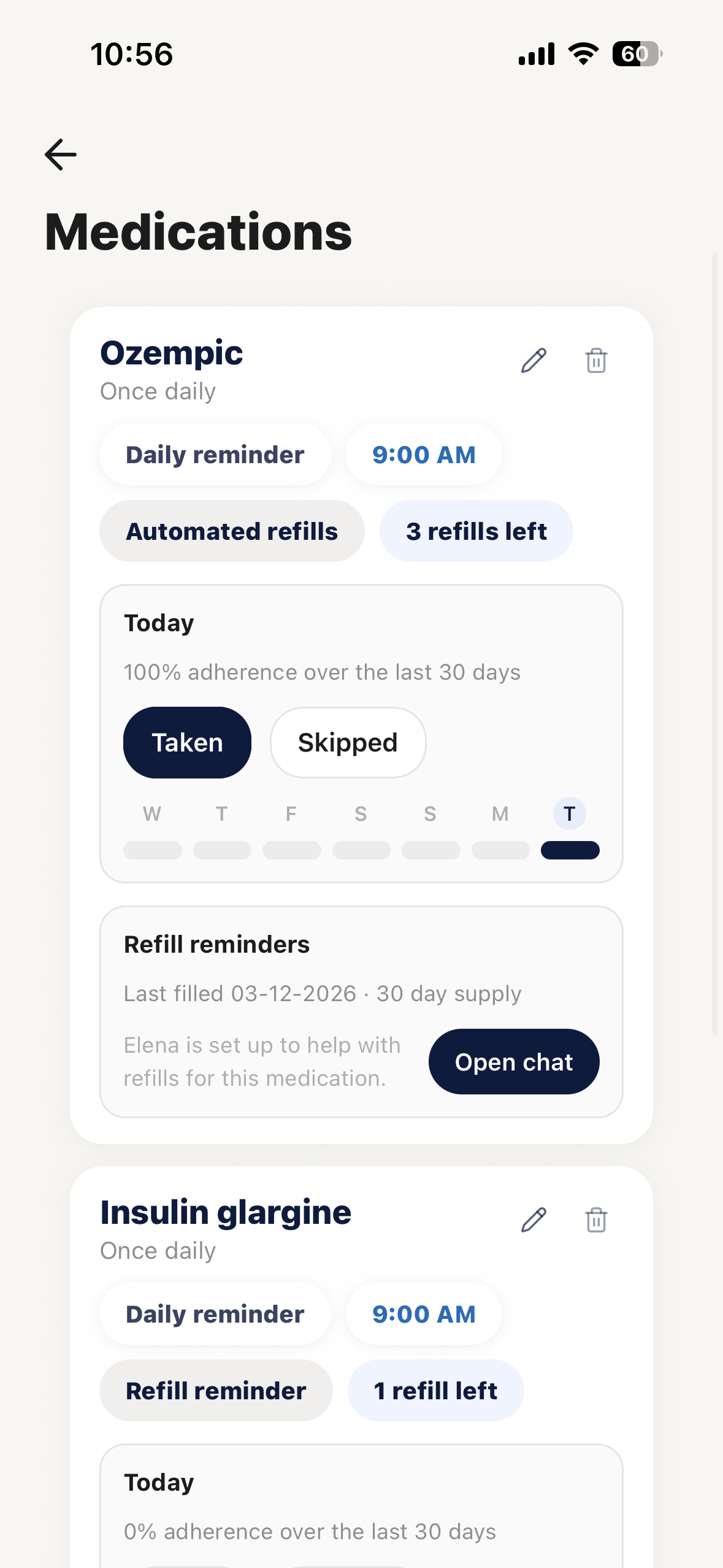
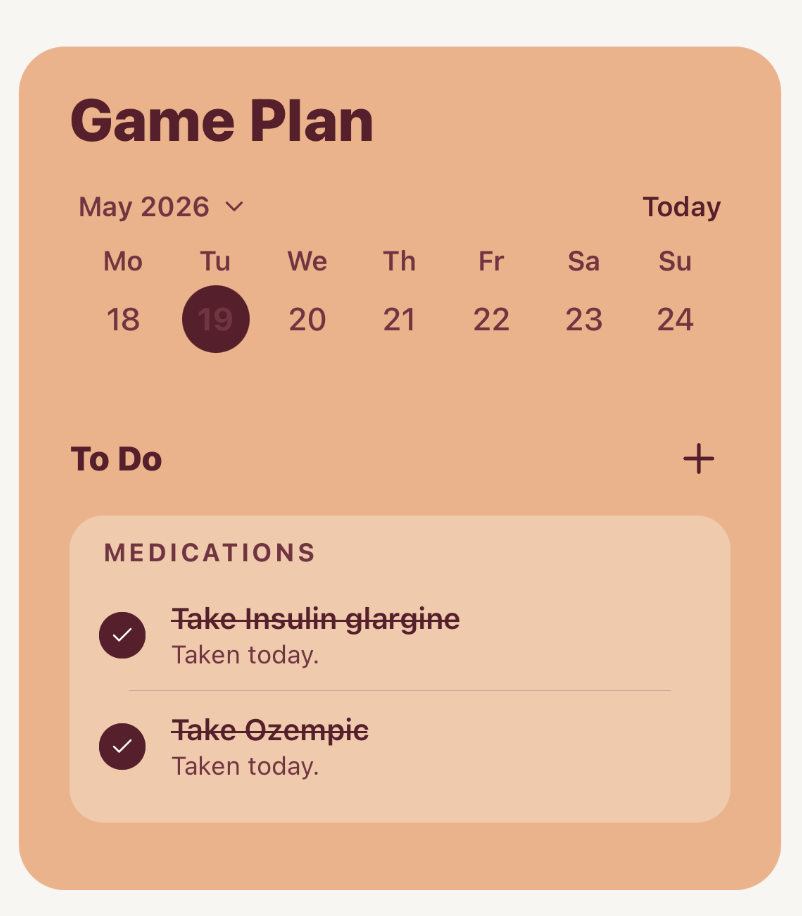
We designed Elena around the fact that medication management is really care navigation. It touches visits, provider questions, refill timing, insurance, and what happens next. That is why the product is built to connect medications to the broader care picture instead of treating them like isolated reminders.
In practice, that means Elena is designed to help you:
- keep medications tied to the person and profile they belong to
- stay ahead of refill timing
- keep notes and questions attached to the medication context
- see follow-up steps after medication changes or visits
- manage the medication picture across multiple family members
If you only change one thing
If your current medication system lives across pharmacy texts, scattered reminders, notes-app checklists, and memory, the highest-leverage change is simple: put the whole medication picture in one place. Once the information is visible, the rest of the work becomes manageable.
That is what better medication management looks like. Not perfection. Not never forgetting anything. Just a system strong enough that you do not have to carry it all alone.