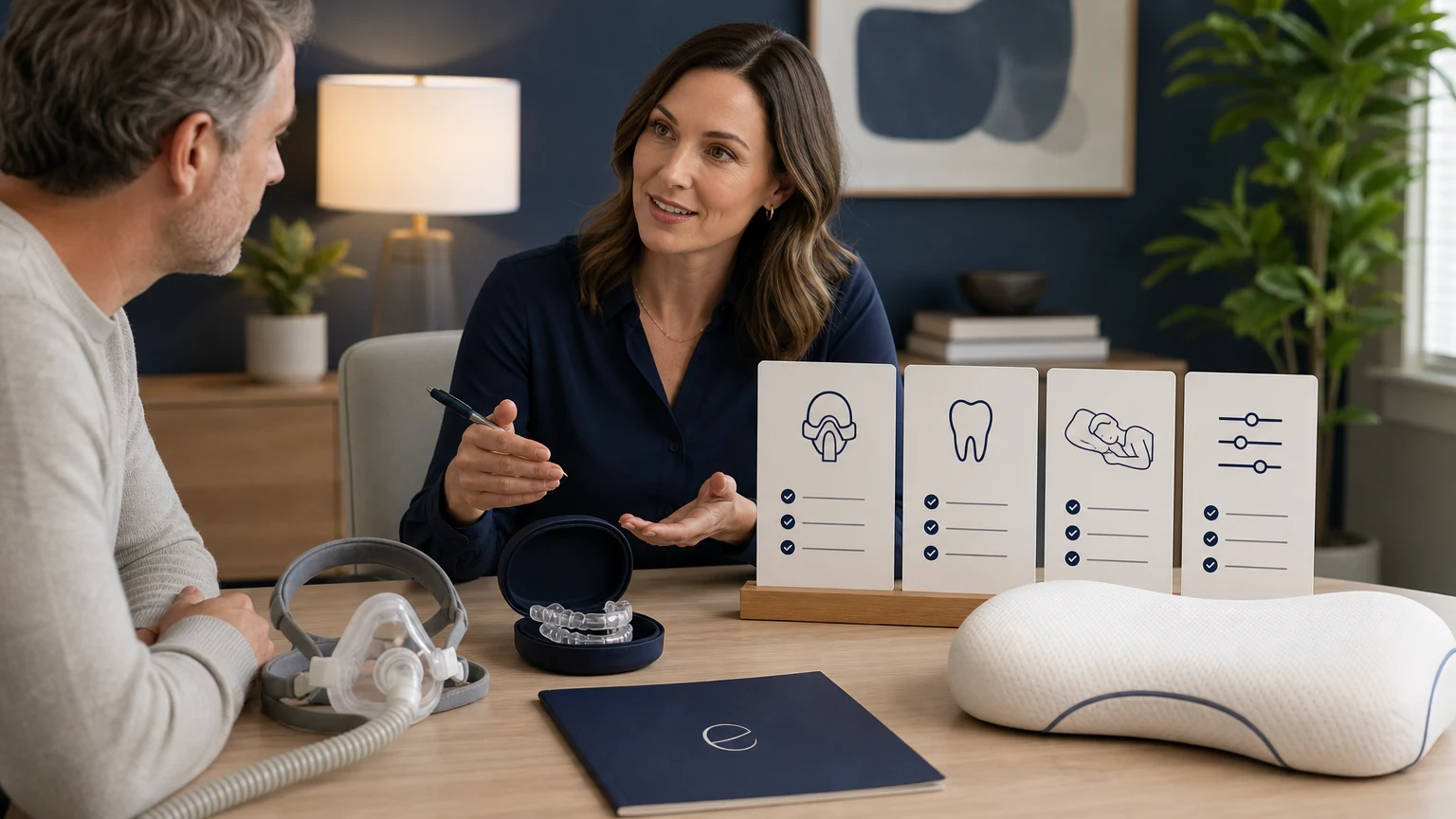
If CPAP is miserable, the answer is not necessarily "give up." The answer is usually: figure out what failed. Was it the mask, the pressure, dryness, claustrophobia, the wrong machine type, or a treatment that is not a good fit for your sleep apnea pattern?
Alternatives exist, but they should be matched to the diagnosis and followed by someone who can tell whether the treatment is actually working.
First: fix the CPAP problem if possible
Before switching away from CPAP, ask whether the current setup can be adjusted. Options may include:
- a different mask or nasal pillows
- humidification or nasal treatment for dryness and congestion
- pressure ramp settings
- APAP, which adjusts pressure automatically during sleep
- BPAP, which uses different pressure for inhaling and exhaling
Sometimes the treatment is fine and the setup is bad.
Oral appliances
For some people, a clinician may prescribe an oral appliance instead of CPAP or when CPAP cannot be tolerated. NHLBI describes mandibular repositioning devices that hold the lower jaw forward and tongue-retaining devices that keep the tongue from blocking the airway. These are typically custom fit by a dentist or orthodontist.
Position and lifestyle changes
Your provider may recommend sleeping on your side, regular physical activity, weight management when appropriate, limiting alcohol and caffeine, quitting smoking, and maintaining healthy sleep habits. These are not always enough by themselves, but they can be part of a treatment plan.
Orofacial therapy and surgical options
NHLBI describes mouth and facial muscle therapy as one possible treatment. Surgical options may include hypoglossal nerve stimulation, tonsillectomy, tissue removal, jaw advancement, or weight-loss surgery when obesity contributes and other treatments are not enough.
Questions to ask before switching
- What did my sleep study show: obstructive, central, or complex sleep apnea?
- How severe is it?
- Is my CPAP issue mask fit, pressure, dryness, anxiety, or something else?
- Would APAP or BPAP make more sense?
- Am I a candidate for an oral appliance?
- How will we confirm the alternative is working?
- Will insurance cover the alternative and what documentation is required?
The key is follow-up. A treatment that feels easier but does not control sleep apnea is not really solving the problem.
Related sleep guides
Sources
- NHLBI: Sleep Apnea Treatment — Treatment options including lifestyle changes, PAP machines, oral devices, orofacial therapy, and surgery.
- NHLBI: Living With Sleep Apnea — Follow-up, PAP use, equipment data, health risks, and safety considerations.
- NHLBI: Sleep Apnea Diagnosis — Sleep studies, sleep diaries, and related tests used when evaluating possible sleep apnea.
- American Academy of Sleep Medicine: Diagnostic Testing for Adult OSA — Clinical guideline stating that diagnostic testing should be tied to a sleep evaluation and adequate follow-up.