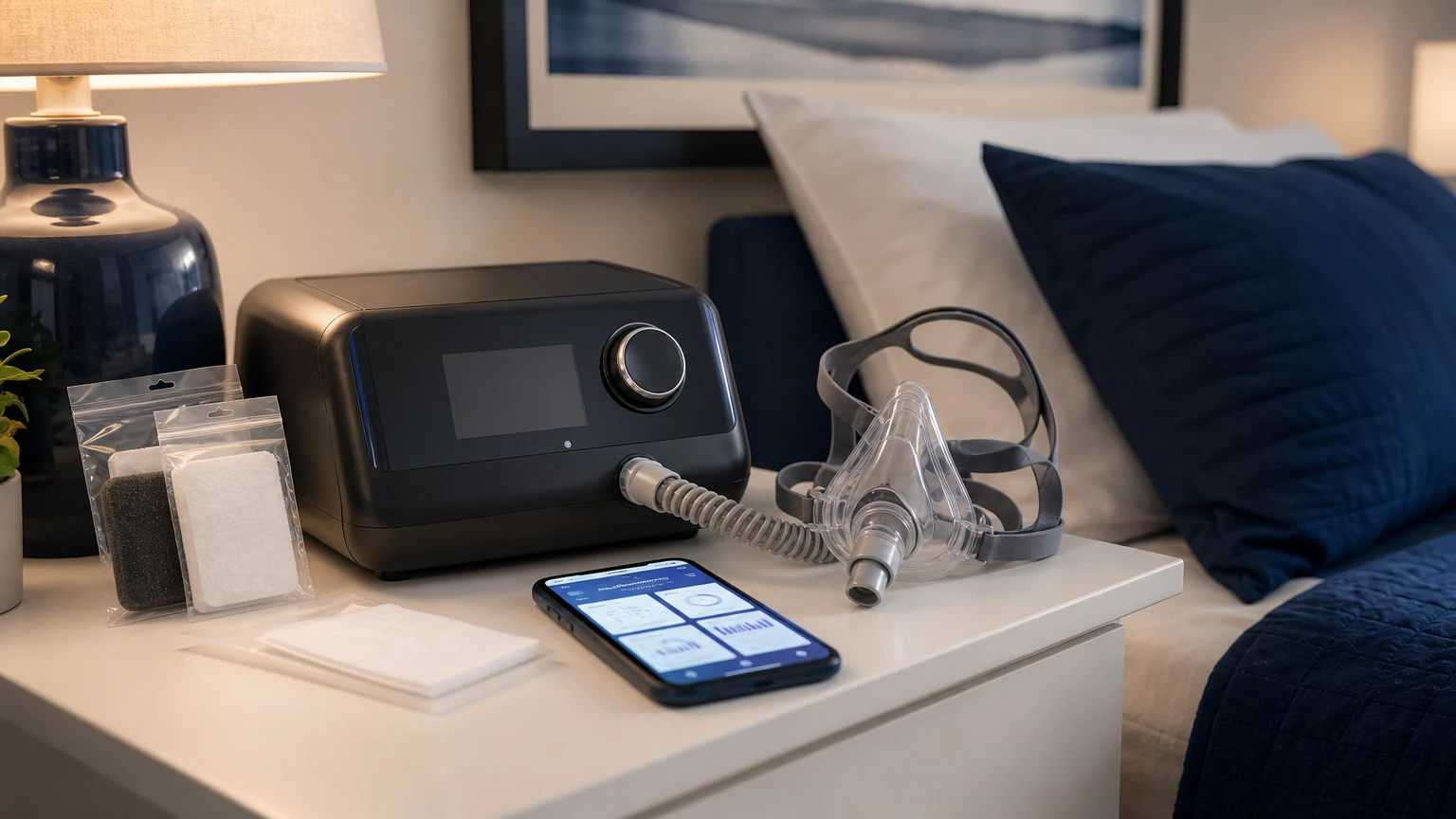
CPAP is not usually a one-time purchase. It can involve a machine, mask, tubing, filters, humidifier parts, replacement supplies, follow-up visits, usage requirements, and insurance rules that are easy to miss.
The machine is only one part of the cost.
What CPAP coverage may include
CPAP therapy is an in-home treatment for sleep apnea. Insurance coverage usually depends on having a qualifying diagnosis, a prescription, and a DME supplier that your plan will work with.
Medicare Part B may cover CPAP therapy for eligible people after obstructive sleep apnea diagnosis. Medicare describes a 12-week CPAP trial, with continued coverage possible if you meet with your provider in person and the medical record documents that the therapy is helping.
The cost pieces to ask about
- machine rental or purchase
- mask and headgear
- tubing and filters
- humidifier chamber or water chamber
- replacement supply schedule
- follow-up appointments
- compliance or usage monitoring
Rental can matter
Medicare says it pays suppliers to rent a CPAP machine for 13 months as long as the patient uses it continuously, and then the patient owns the machine after those rental payments. Private plans may use different rules, so ask whether your plan rents, buys, or requires a specific supplier.
Ask the DME supplier these questions
- Are you in-network for my plan?
- Will you accept assignment or the plan's allowed amount?
- What will I owe each month?
- How long is the rental period?
- What counts as compliant use?
- What happens if I need a different mask?
- How do replacement supplies get ordered?
Why follow-up matters
CPAP problems are common and often fixable: mask leaks, dry mouth, congestion, pressure discomfort, noise, or claustrophobia. NHLBI notes providers may adjust the mask, machine type, pressure settings, humidification, or other details. Do not just quit silently. A small adjustment can be the difference between a device that sits unused and a treatment that works.
Related sleep guides
Sources
- NHLBI: Sleep Apnea Treatment — Treatment options including lifestyle changes, PAP machines, oral devices, orofacial therapy, and surgery.
- NHLBI: Living With Sleep Apnea — Follow-up, PAP use, equipment data, health risks, and safety considerations.
- Medicare.gov: CPAP Therapy — Medicare CPAP trial, DME rental, supplies, assignment, and cost guidance.
- Medicare.gov: Durable Medical Equipment Coverage — Medicare's DME definition and examples including canes, walkers, wheelchairs, CPAP, glucose monitors, and hospital beds.
- HealthCare.gov: Deductible — Definition of deductible and how it interacts with covered services, copayments, and coinsurance.
- HealthCare.gov: Coinsurance — Definition and examples of coinsurance after deductible.