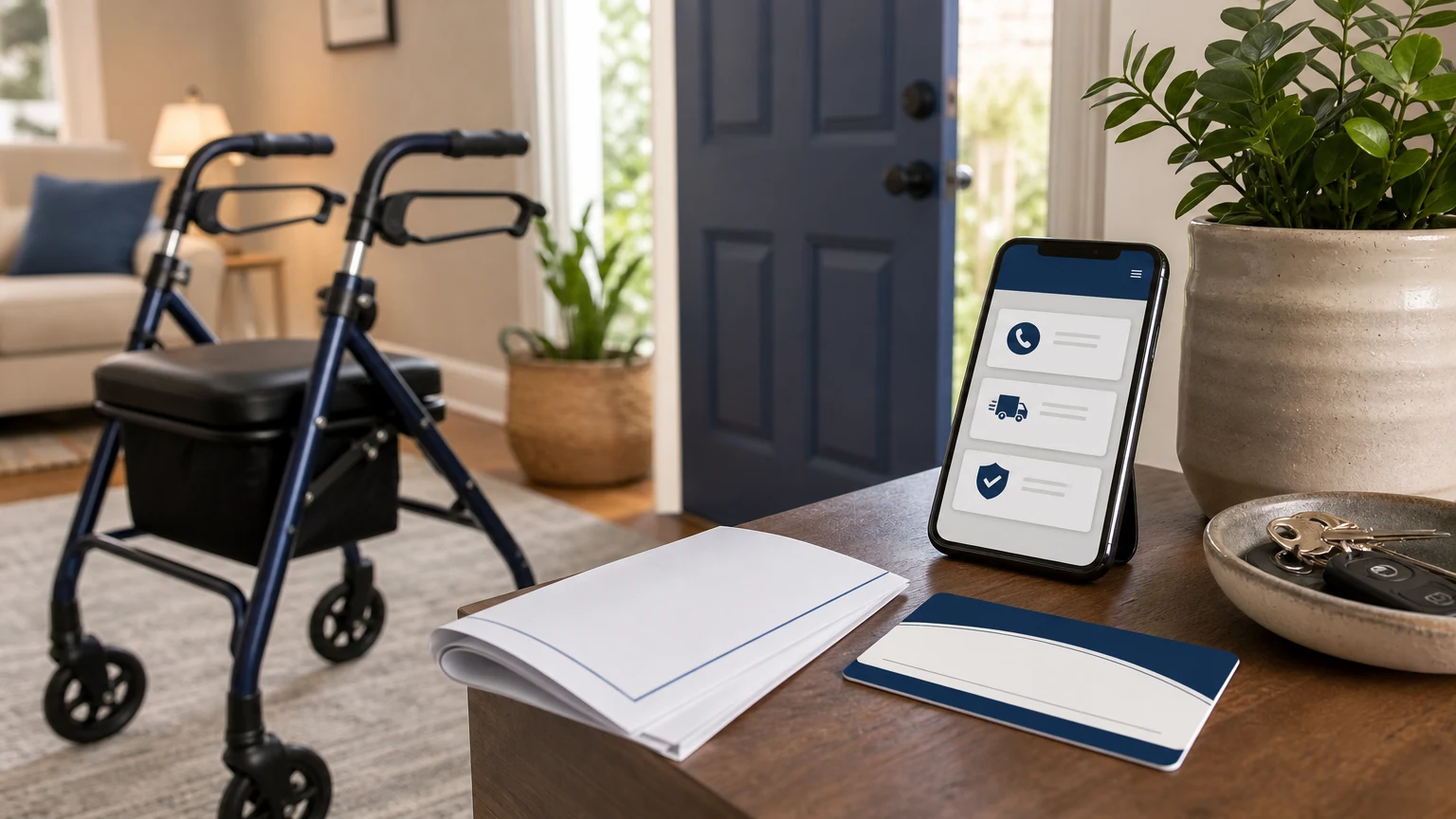
Getting durable medical equipment through Medicare should be simple: doctor says you need it, supplier gives it to you, Medicare helps pay. In practice, the process often gets stuck because the prescription is too vague, the supplier is wrong, assignment is unclear, or nobody knows who is supposed to submit the paperwork.
The best way to handle Medicare DME is to treat it like a small workflow, not a shopping errand.
What counts as DME
Medicare defines durable medical equipment as equipment that can withstand repeated use, is used for a medical reason, is typically only useful to someone who is sick or injured, is used in the home, and is expected to last at least three years.
Examples can include walkers, wheelchairs, scooters, hospital beds, oxygen equipment, CPAP equipment, glucose monitors and supplies, canes, crutches, commode chairs, and infusion pumps.
The Medicare DME path
- Get the clinical need documented. The provider should document why the equipment is medically necessary and how it will be used at home.
- Get a written order or prescription. The order should be specific. "Walker" is weaker than "four-wheel rollator with seat due to limited walking tolerance and fall risk."
- Use a Medicare-enrolled supplier. Medicare tells beneficiaries to make sure both the doctor and DME supplier are enrolled in Medicare.
- Ask whether the supplier accepts assignment. This matters because assignment limits what the supplier can charge for covered services.
- Confirm rent vs buy. Medicare covers different kinds of DME in different ways. Some items are rented, some are bought, and some become yours after enough rental payments.
- Track prior authorization if required. Certain power wheelchairs may require prior authorization before Medicare covers the item.
The assignment question matters
Ask the supplier: "Do you participate in Medicare and accept assignment for this item for every rental month?" If the supplier accepts assignment, Medicare says they can charge only the deductible and coinsurance for the Medicare-approved amount. If they do not accept assignment, you can be charged more or asked to pay more upfront.
What you may owe
For covered DME under Medicare Part B, after the Part B deductible, Medicare generally describes the patient responsibility as 20% of the Medicare-approved amount if the supplier accepts assignment. The exact amount can depend on the item, supplier, rental status, other insurance, and whether the supplier accepts assignment.
Where people get stuck
- The provider note does not explain medical necessity.
- The prescription is missing exact equipment details.
- The supplier is not enrolled, not participating, or not accepting assignment.
- The item needs prior authorization and nobody submitted it.
- The supplier says "not covered" but cannot explain which requirement failed.
- The patient buys the item first, then tries to get reimbursed after the fact.
What to ask before you pay cash
- Is this item covered under my Medicare benefit?
- Does this supplier accept assignment?
- Is this a rental or purchase?
- Will I own it after a certain number of rental payments?
- Is prior authorization required?
- What documentation is missing right now?
Related medical equipment guides
Sources
- Medicare.gov: Durable Medical Equipment Coverage — Medicare's DME definition and examples including canes, walkers, wheelchairs, CPAP, glucose monitors, and hospital beds.
- Medicare.gov: Provider Assignment — How accepting assignment affects Medicare out-of-pocket costs and claims submission.
- Medicare.gov: Wheelchairs and Scooters — Coverage requirements, face-to-face exam, prescription, prior authorization, and cost guidance for power mobility equipment.
- Medicare.gov: CPAP Therapy — Medicare CPAP trial, DME rental, supplies, assignment, and cost guidance.