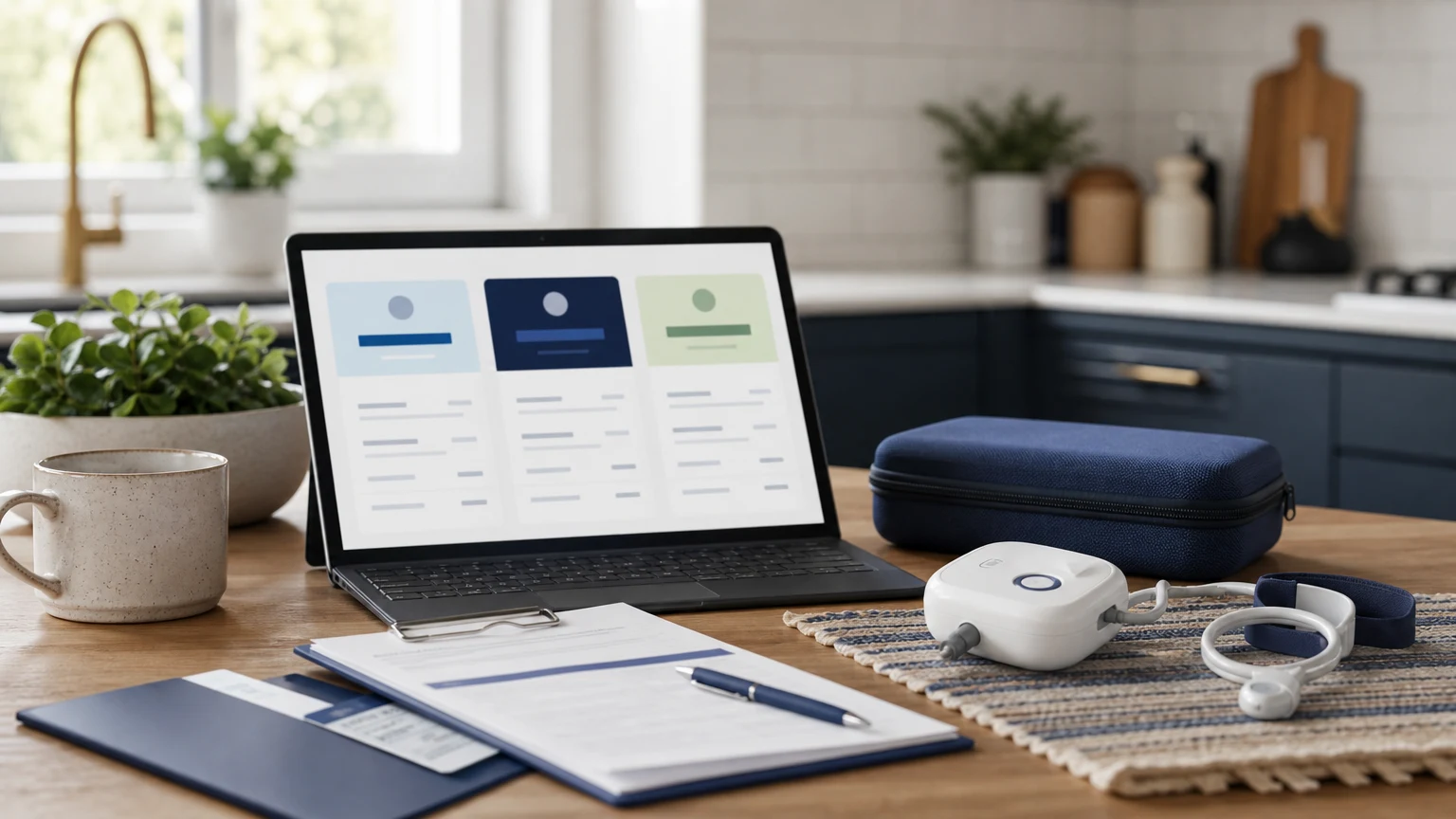
A sleep study can be medically straightforward and administratively annoying. The clinical question is whether your breathing and sleep patterns show sleep apnea. The cost question is whether the test is authorized, in-network, billed correctly, and affordable under your plan.
Before you schedule, get clear on the test type and the payment path.
Home sleep test vs in-lab sleep study
Sleep studies are used to monitor sleep patterns, breathing, and movement. Some tests happen at home. Others happen overnight in a sleep lab. Medicare says Part B covers eligible Type I, II, III, and IV sleep tests, but Type I tests are only covered when done in a sleep lab facility.
Your doctor or sleep specialist should tell you which type is appropriate for your symptoms and medical history. If your case is more complex, an in-lab test may be more appropriate than a home test.
The insurance questions to ask first
- Is a prior authorization required?
- Does my plan require a referral or physician order?
- Is the sleep center in-network?
- Will there be separate facility, interpretation, or professional fees?
- What CPT codes will be billed?
- What is my estimated cost based on my deductible and coinsurance?
- If it is a home sleep test, who supplies the device and who bills the claim?
How the cost math works
Insurance cost usually depends on deductible, coinsurance, network status, and the allowed amount. If you have not met your deductible, you may owe most or all of the allowed amount. If you have met your deductible, you may only owe coinsurance or a copay.
Example: your in-network sleep study allowed amount is $900 and you have $1,500 left on your deductible. You may owe the full $900. If your deductible is already met and your coinsurance is 20%, you may owe about $180, depending on your plan.
When to compare cash pay
Cash pay may be worth checking if you have a high deductible, the sleep center offers a clear self-pay price, and the cash price is lower than your expected insurance responsibility. But cash pay may not count toward your deductible and may not be accepted if your plan requires specific documentation before CPAP coverage.
What to save
Keep the order, referral, authorization number, estimate, sleep study report, itemized receipt, and any portal messages. If a CPAP or oral appliance is recommended later, those records may matter for coverage.
Related sleep guides
Sources
- NHLBI: Sleep Apnea Diagnosis — Sleep studies, sleep diaries, and related tests used when evaluating possible sleep apnea.
- Medicare.gov: Sleep Studies — Medicare Part B coverage details for eligible sleep studies and expected 20% coinsurance after deductible.
- HealthCare.gov: Deductible — Definition of deductible and how it interacts with covered services, copayments, and coinsurance.
- HealthCare.gov: Coinsurance — Definition and examples of coinsurance after deductible.
- HealthCare.gov: Out-of-pocket maximum — Definition of the annual limit for covered in-network care.
- American Academy of Sleep Medicine: Diagnostic Testing for Adult OSA — Clinical guideline stating that diagnostic testing should be tied to a sleep evaluation and adequate follow-up.